Geographic Factors Shaping Casino Loyalty Structures for Card Games
Written by Clara Powell · Jul 22, 2026

Geographic Factors Shaping Casino Loyalty Structures for Card Games
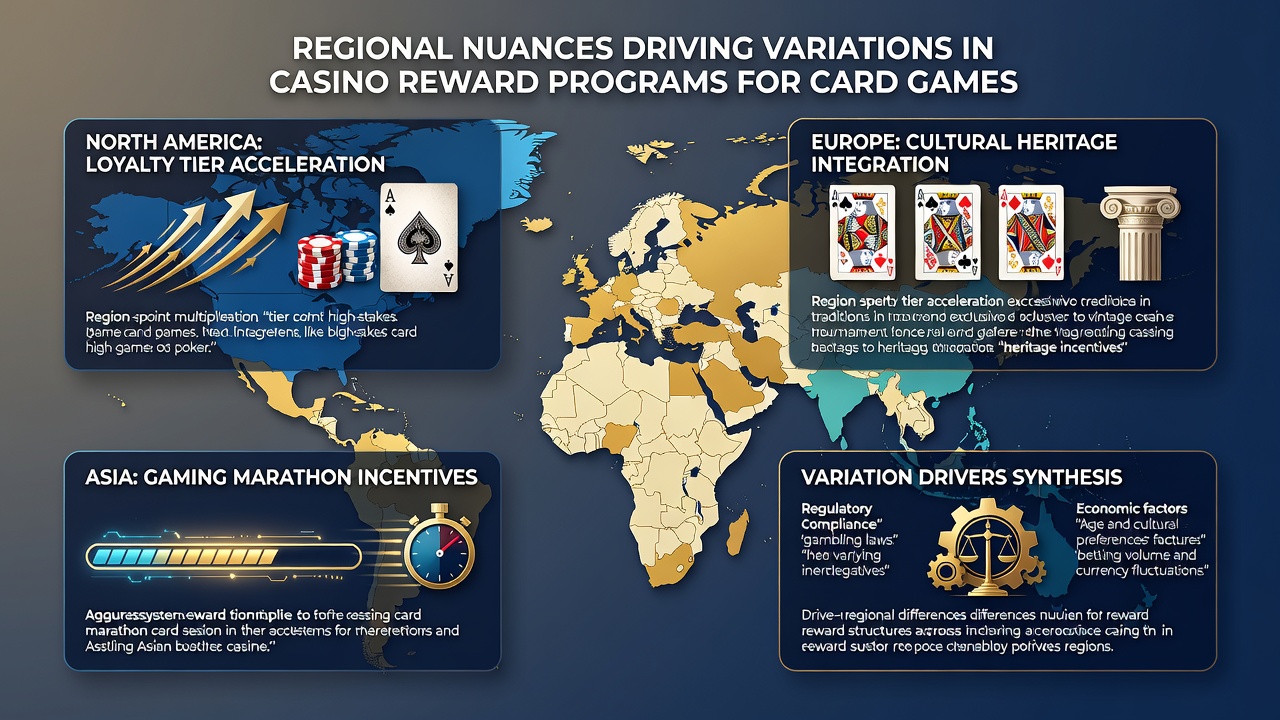
Regional differences in regulations and player preferences create distinct patterns in how casinos structure reward programs for card games like blackjack and poker. Data from multiple markets shows that local laws, tax structures, and cultural attitudes toward gambling directly influence the types of comps, tiered benefits, and redemption options available to participants.
North American Market Variations
Observers note that American states with mature gaming industries often tie reward programs to strict player tracking systems that comply with state-specific rules. In Nevada, for instance, casinos frequently emphasize high-limit table game comps such as hotel stays and dining credits because the regulatory framework allows flexible distribution of non-cash incentives. By contrast, New Jersey operators integrate rewards more closely with online platforms, where points earned at physical tables convert into digital bonuses under oversight from the Division of Gaming Enforcement.
Canadian provinces demonstrate another layer of variation, with Ontario and British Columbia emphasizing loyalty structures that incorporate responsible gaming limits. Research from provincial gaming commissions indicates these programs often cap reward redemptions and redirect a portion of points toward self-exclusion tools, reflecting stricter provincial mandates compared to U.S. counterparts.
European and Asian Approaches
European markets present further contrasts. Malta-based operators serving multiple EU countries adjust card game rewards according to each nation's gambling tax rates and consumer protection requirements. Casinos in these regions commonly offer time-limited points multipliers during peak tourism seasons, while mainland operators in Spain and Italy focus on cashback structures tied to table minimums that align with local fiscal policies.
Asian jurisdictions such as Macau and Singapore maintain reward frameworks centered on VIP segmentation. Data shows that Macau properties prioritize private gaming salons where high-volume card players receive personalized travel packages and entertainment credits, whereas Singapore's two integrated resorts structure programs around public table games with more standardized tier benefits that comply with the Casino Regulatory Authority's guidelines.
Impact of Regulatory Timing on Program Design
Changes scheduled for July 2026 in several U.S. states are expected to prompt further adjustments. Regulatory updates in Pennsylvania and Michigan, for example, will require casinos to report reward program metrics more frequently, which industry analysts predict will lead to refined segmentation models that differentiate between live and online card game participation. These shifts build on existing patterns where states with shared player databases already coordinate reward eligibility across borders.
Data-Driven Customization Across Borders
Studies from the University of Nevada's gaming research division reveal that casinos increasingly use cross-border data sharing agreements to tailor offers. Players who frequent card tables in one jurisdiction may receive targeted promotions when traveling to another, yet the redemption value of those offers varies according to local cost structures and tax obligations. This approach appears in multi-state operators that maintain unified loyalty databases while adapting individual benefit packages to regional rules.
Australian states add another dimension through their point-of-consumption tax models. Reward programs in New South Wales and Victoria often feature slower point accumulation rates for table games compared to electronic gaming machines, a structure shaped by state legislation that seeks to balance revenue collection with player engagement incentives. Reports from the Australian Gambling Research Centre document how these differences affect long-term player retention metrics across card game formats.
Conclusion
Regional nuances continue to drive measurable differences in how casinos design and deliver reward programs for card games. Regulatory frameworks, tax policies, and cultural expectations in each jurisdiction shape the specific mix of comps, tier benefits, and redemption options that operators provide. As markets evolve through 2026 and beyond, these geographic distinctions are likely to remain central to program development across North America, Europe, Asia, and Australia.