Behavioral Analytics Powering Customized Table Game Bonuses Across Multi-State Online Platforms
Written by Clara Koch · Jun 7, 2026
Behavioral Analytics Powering Customized Table Game Bonuses Across Multi-State Online Platforms
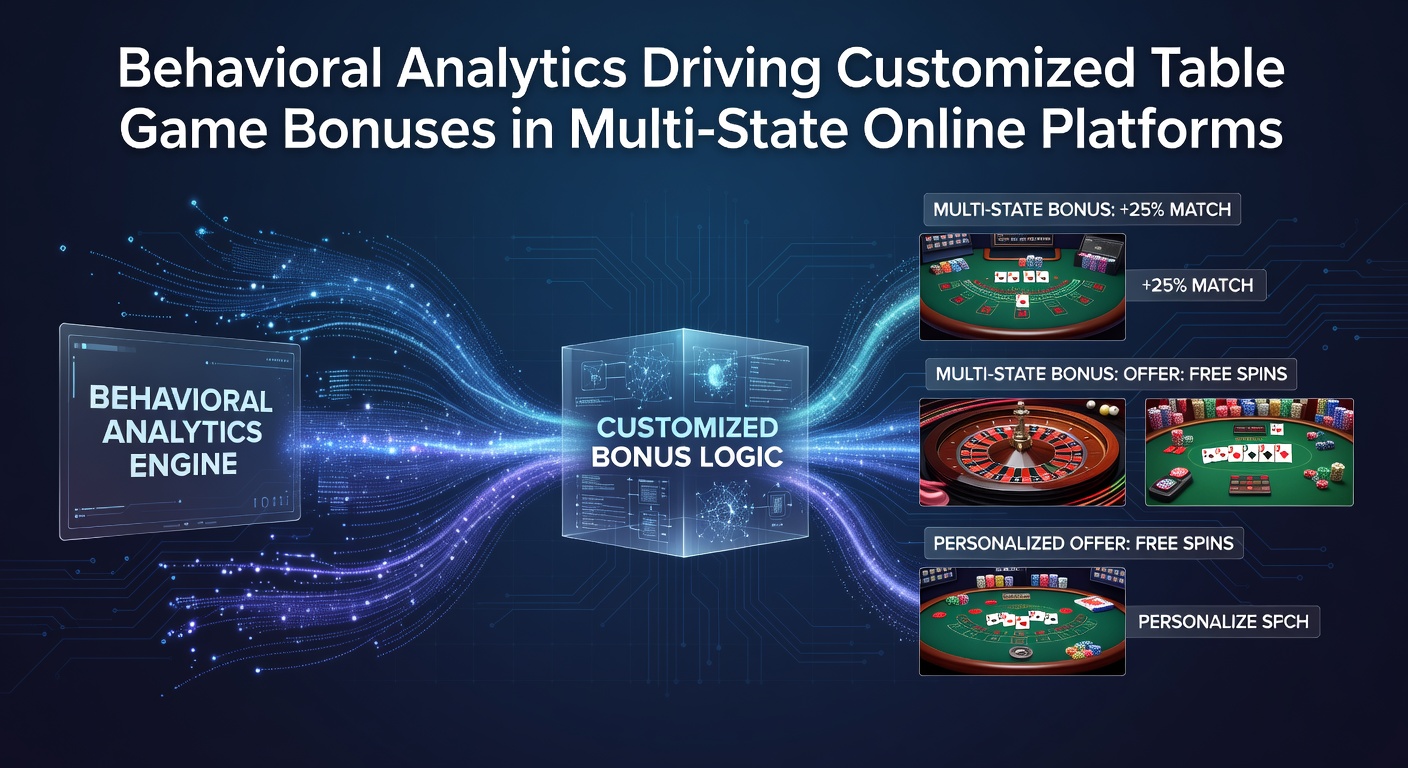
Behavioral analytics now guide how operators deliver table game bonuses to players in regulated markets that span multiple states. Platforms collect data on betting frequency, session length, game selection, and response to previous offers, then apply algorithms that adjust bonus structures in real time. This approach differs from earlier blanket promotions because it matches incentives to observed patterns rather than broad player categories.
Operators active in New Jersey, Pennsylvania, and Michigan maintain separate player databases for each jurisdiction while sharing analytical models that respect state-specific rules. Data points such as average wager size on blackjack, time spent at virtual tables, and deposit timing feed into scoring systems that determine whether a player receives a match bonus, free play credits, or a combination of both. These systems update offers daily or even within a single session when patterns shift.
Data Collection Methods Behind Offer Customization
Tracking begins the moment a player registers and continues through every interaction with the platform. Clickstream data, device type, and location verification logs combine with gameplay metrics to build detailed profiles. In practice, one player who consistently places mid-stakes bets after 8 p.m. on weekdays may receive time-limited table game credits, whereas another who favors shorter sessions on weekends sees different match percentages tied to deposit amounts. Algorithms compare these profiles against historical cohorts to predict which incentive is likely to extend play without exceeding responsible gaming thresholds set by each state.
Multi-state operators must segment data by jurisdiction because rules governing bonus advertising and wagering requirements vary. Pennsylvania, for instance, requires clear disclosure of playthrough conditions, while Michigan emphasizes geolocation accuracy. Analytical teams therefore run parallel models that apply the same behavioral logic but output offers compliant with each regulatory framework. This layered process keeps cross-border promotions consistent in feel while remaining legally distinct.
Application to Table Games Versus Slot Incentives
Table game bonuses require different modeling than slot promotions because blackjack and roulette carry lower house edges and different volatility profiles. Analysts track metrics such as average hands played per session and deviation from basic strategy to estimate player skill level and lifetime value. A profile showing frequent doubling-down behavior might trigger a bonus that rewards strategic play with additional chips rather than free spins, because that incentive aligns with observed preferences and sustains engagement longer.
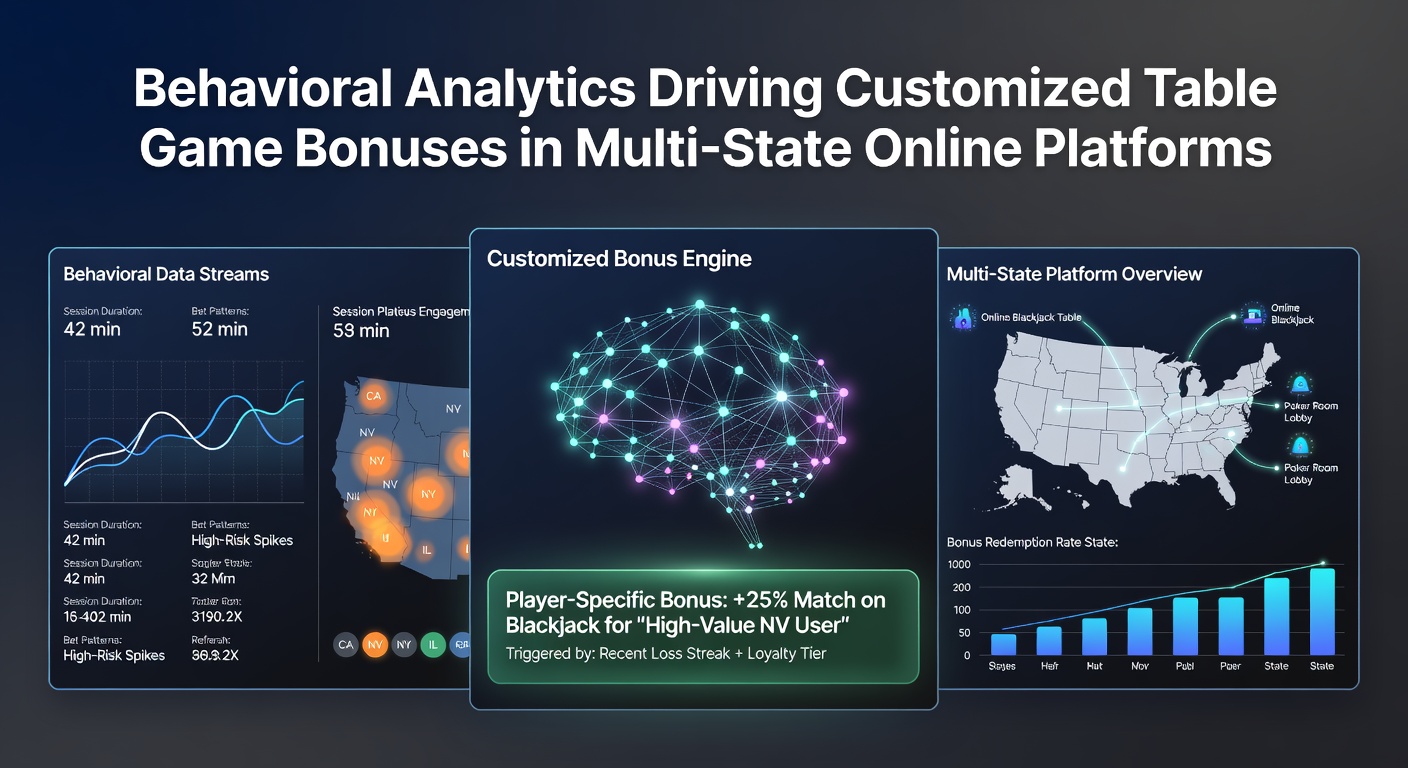
Operators have observed that players who receive table-game-specific bonuses tend to maintain steadier bankrolls across longer sessions. The same data sets also flag risk indicators, allowing platforms to adjust or withhold offers when patterns suggest potential harm. This dual function of personalization and harm minimization appears in reports filed with state regulators, where aggregate bonus redemption rates are tracked alongside self-exclusion metrics.
Regulatory Landscape and June 2026 Developments
By June 2026 several states are expected to finalize updates to their online gaming regulations, including clearer guidelines on the use of artificial intelligence in bonus distribution. Platforms operating across borders already prepare models that incorporate these forthcoming requirements, such as mandatory audit trails for algorithmic decisions and player opt-out mechanisms for data-driven offers. New Jersey's Division of Gaming Enforcement has published technical standards that operators reference when designing cross-state analytics systems, while Michigan's Gaming Control Board continues to emphasize geofencing accuracy as a prerequisite for any personalized promotion.
Industry groups such as the American Gaming Association have compiled anonymized datasets showing how behavioral segmentation affects bonus uptake across jurisdictions. These compilations help operators benchmark their own models without sharing proprietary player information. Academic researchers at institutions including the University of Nevada, Reno have published peer-reviewed studies examining the relationship between personalized incentives and session duration in simulated multi-state environments, providing an external reference point for regulatory discussions.
Future Trajectory for Analytics-Driven Table Game Offers
Continued refinement of machine-learning models will likely increase the granularity of table game bonuses. Platforms are testing real-time adjustments based on in-session performance, such as offering a small chip top-up after a player reaches a predetermined number of hands without a win. Such micro-offers depend on continuous data streams and must remain within the wagering requirement frameworks already approved by each state gaming authority.
Cross-platform data sharing agreements among affiliated operators allow a player who moves between state-licensed sites to receive consistent treatment, provided jurisdictional firewalls remain intact. This continuity reduces the friction players encounter when bonuses differ sharply from one state to another, yet it still respects the separate licensing regimes that govern each market.
Conclusion
Behavioral analytics have become a core operational tool for delivering customized table game bonuses in multi-state online environments. The combination of detailed player tracking, jurisdiction-specific compliance layers, and predictive modeling enables operators to align incentives with actual behavior while meeting regulatory standards that continue to evolve through 2026. Data from state filings and independent research indicates that these systems will grow more precise as platforms integrate new variables and refine existing algorithms.